Fishless Cycling: How to Cycle a New Aquarium Without Fish
Fishless cycling grows beneficial bacteria before any fish arrive. Step by step: ammonia source, daily testing, knowing when it's done, and safe stocking.
AdThis article contains affiliate links. We may earn a commission at no extra cost to you.
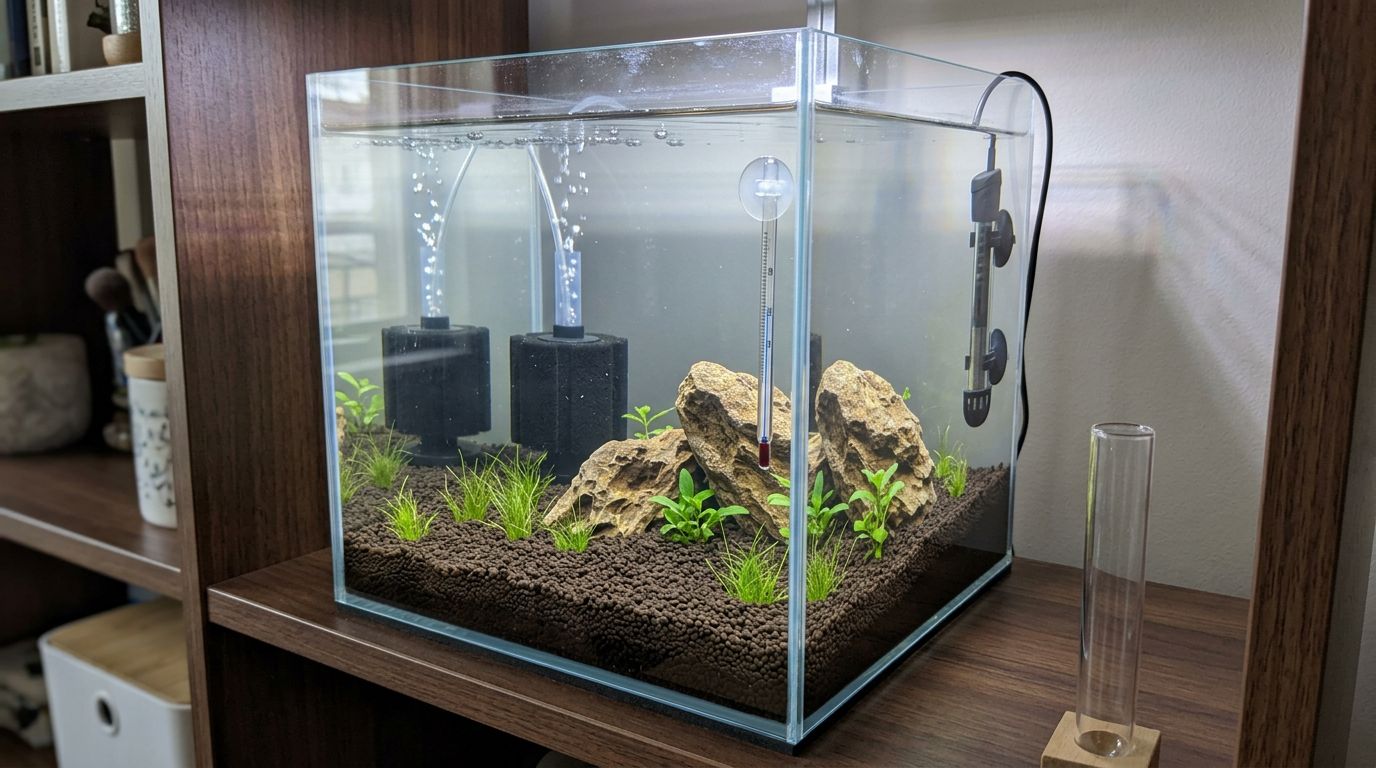
You may have heard of "starter fish" or "pilot fish" for cycling a new tank. The problem is that putting fish into a tank with no bacteria means asking them to survive weeks of toxic water. Fishless cycling grows the bacteria first, so your fish never have to go through the ammonia and nitrite peaks. It's the approach most sources recommend today, and this guide walks you through it from start to finish.
What fishless cycling is
The nitrogen cycle is the process where bacteria convert ammonia (very toxic) into nitrite (toxic) and then nitrate (nearly harmless). Those bacteria need ammonia as food. In fishless cycling, you provide that ammonia yourself instead of relying on fish waste.
The advantages are clear:
- No fish are exposed to the ammonia and nitrite spikes
- No emergency water changes during the cycle
- When it's done, the tank can take a small group of fish right away instead of one at a time
The only real downside is staring at an empty tank for a few weeks. Expect the same 4-6 weeks as any other cycle (anywhere from about two weeks to several months depending on conditions).
What you'll need
- A fully set-up tank with the filter running and the heater holding a steady temperature (22-28°C / 72-82°F for a typical tropical tank)
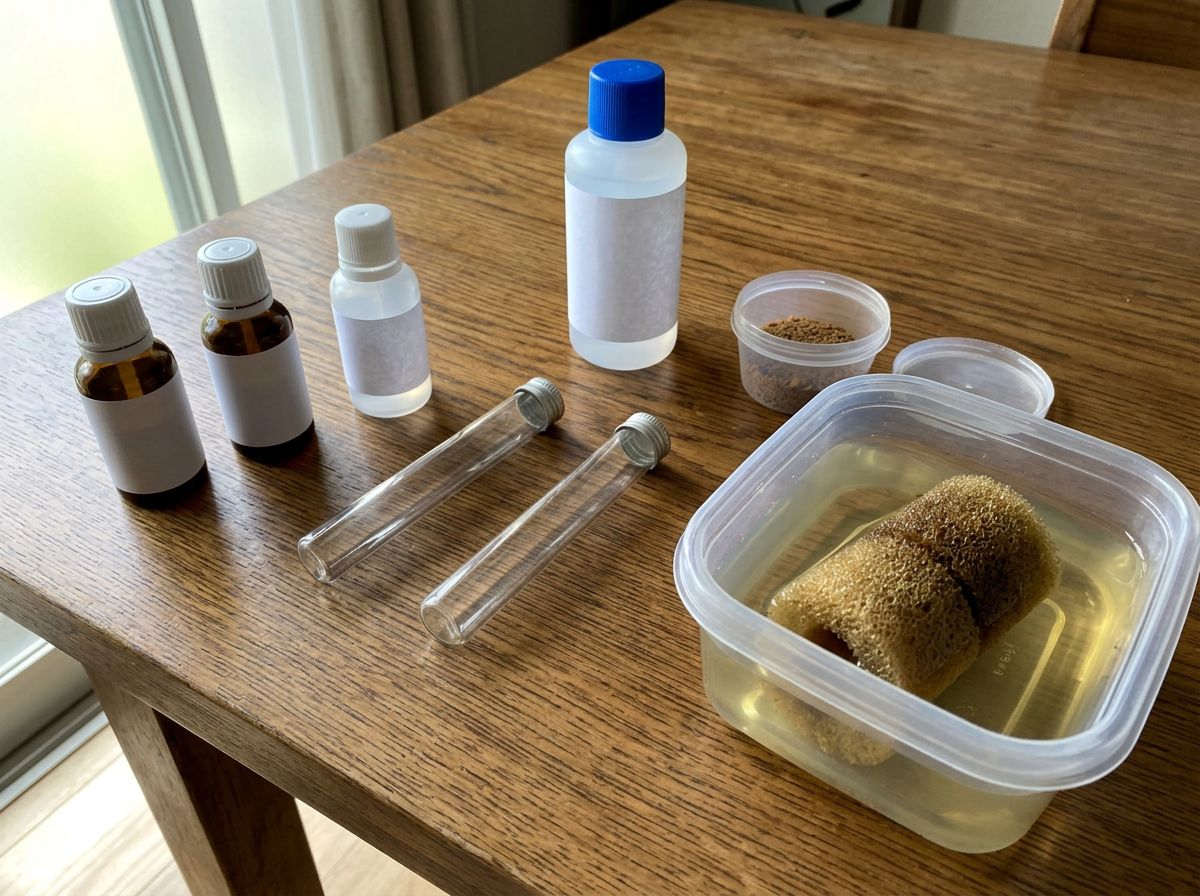
- An ammonia source: some people drop in a small amount of fish food and let it decay; others use an ammonia product sold for aquarium cycling
- A test kit that measures ammonia and nitrite. Many test strips don't cover ammonia, so a liquid kit such as the API Freshwater Master Test Kit is a popular choice for cycling
- Water conditioner (dechlorinator)
- If you can get it: water or, better yet, used filter media from an established tank. Seeding like this is the most reliable way to shorten the process
The four steps
Step 1: Add an ammonia source
With the tank running, add your ammonia source. Follow the product's directions for dosing and start small — just enough for ammonia to register on your test kit. Overdosing can stall the process rather than speed it up. If you're using fish food, add a pinch and give it a few days to break down.
Step 2: Test every day
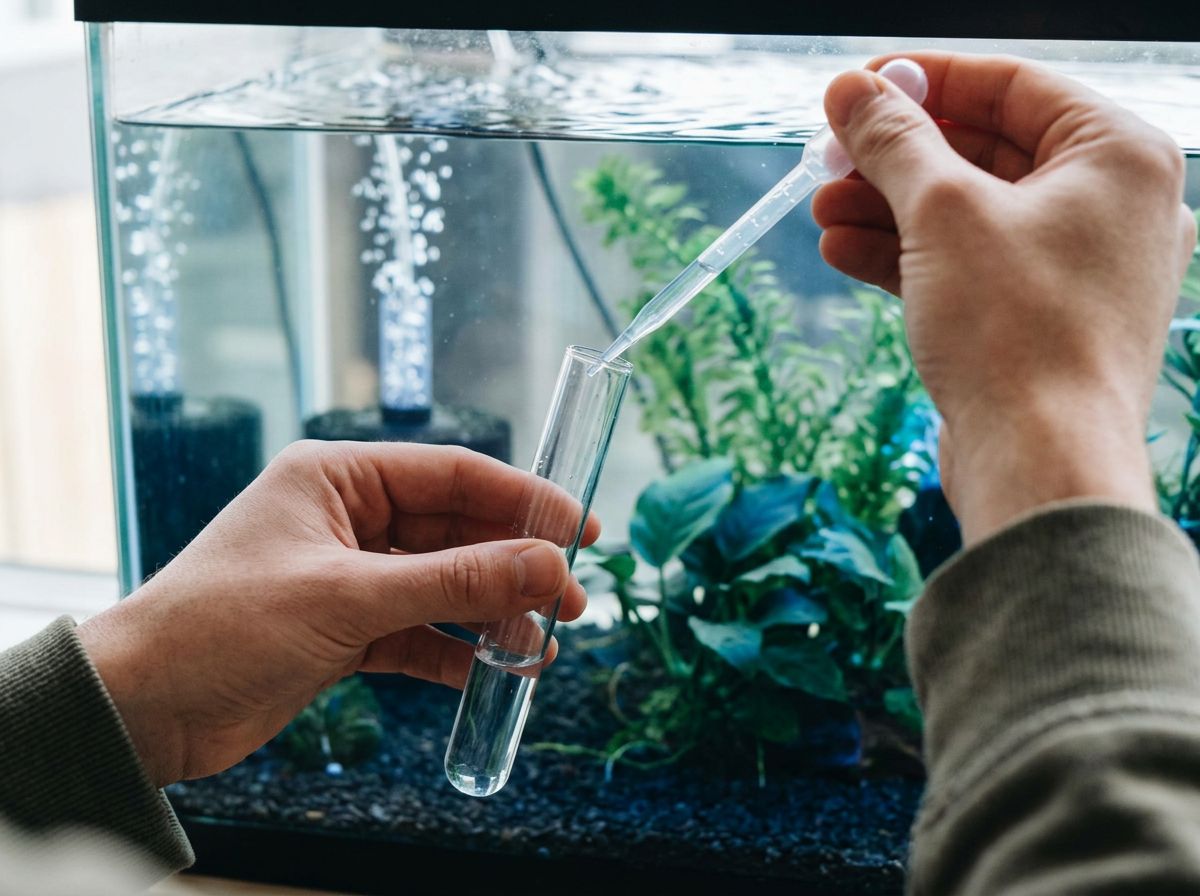
During cycling, test ammonia and nitrite daily. The typical pattern is an ammonia peak in week 1, a nitrite peak in weeks 2-3, and both falling from week 3-4 onward.
Write down each reading the same day so you can clearly see when a peak has passed. If you log them in the Aquarium app, ammonia and nitrite are flagged green, yellow, or red automatically — a good moment to track it in the app and build the habit before the fish arrive.
Step 3: Once ammonia starts disappearing, keep feeding the bacteria
When ammonia drops to near zero within a day of dosing, your bacteria are established. Keep them fed by adding small amounts of ammonia source. It's normal for nitrite to still be high at this stage — no need to worry.
Step 4: Confirm completion, do a water change, then add fish
The cycle is complete when ammonia and nitrite both read 0 mg/L the day after you add the ammonia source, and nitrate is higher than where you started (your tap water), and that holds for several days in a row. Zeros in a tank that has only had water running, with no ammonia source added, do not count. The 4-6 weeks is a guide; the test results decide.
Before adding fish, do a water change to dilute the nitrate that has built up. Target 0-25 mg/L (ideally under 10); above 40-50 mg/L is the danger zone. Dechlorinate the new water and match the temperature to within 1-2°C (2-4°F) of the tank.
Adding your first fish
A freshly cycled tank can still be overwhelmed. Add livestock gradually, in small groups. After each addition, test nitrate weekly for 2-3 weeks; if it stays under 40 mg/L, you're clear to add the next group.
When introducing fish, float the sealed bag for 15-30 minutes to equalize temperature. For shrimp and other sensitive species, drip-acclimate over 30-60 minutes. Start feeding once or twice a day, only as much as they finish in 2-3 minutes.
FAQ
Can I manage a fishless cycle with test strips alone?
Strips are convenient, but many don't measure ammonia. In fishless cycling, the rise and fall of ammonia is your progress report, so a kit that covers both ammonia and nitrite is strongly recommended.
Do I need to change water during the cycle?
With no fish in the tank, high ammonia or nitrite doesn't require emergency changes. You will want a water change if nitrate climbs very high, and definitely one before adding fish. Avoid rinsing filter media under tap water — use tank water if it needs a rinse.
It's been weeks and ammonia isn't dropping
Common causes include too much ammonia source, water that's too cold, or untreated tap water. Change only one thing at a time so you can tell what helped. If you can borrow seeded filter media from a healthy tank, that's the most dependable fix.
Summary
- Fishless cycling feeds the bacteria with an ammonia source instead of fish. It's the recommended way to start a tank
- The steps: add ammonia, test daily, top up in small amounts, confirm completion, change water, then add fish
- Done means ammonia 0 and nitrite 0 the day after dosing, with nitrate above its starting level, for several days running. Budget 4-6 weeks
- Stock slowly, and test nitrate weekly after each addition
Testing and logging every day during the cycle is the same habit that makes experienced fishkeepers successful. Use those empty-tank weeks as a head start.
This article contains affiliate links. We may earn a commission at no extra cost to you.