Keeping Medaka (Japanese Rice Fish): Temperature, Tank Size and Stocking
Medaka need no heater, but they do have targets: 20-28°C, pH 6.5-8.0, one fish per liter at most. Container size, stocking, feeding and water changes.
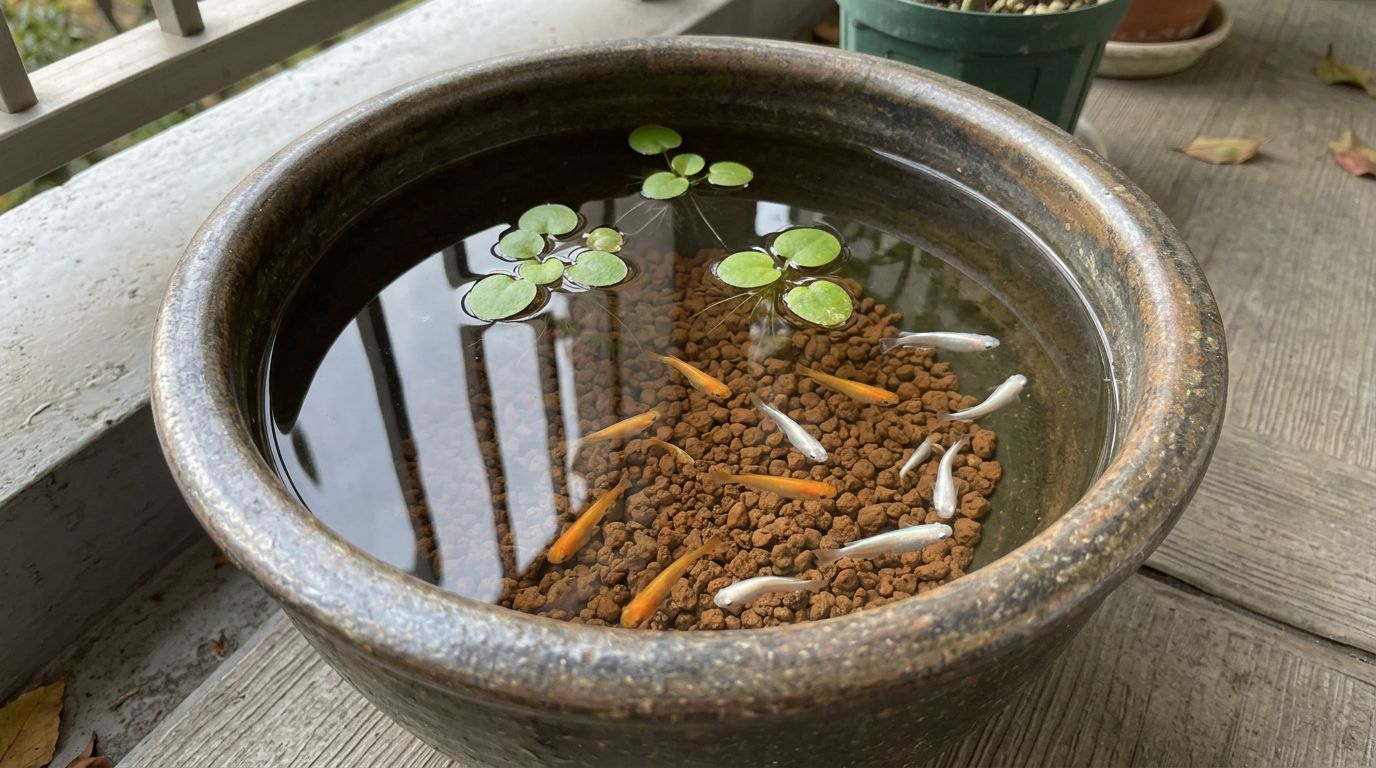
"Medaka are hardy. Put them in a bowl and they look after themselves." Half of that is true, and the other half is where beginners get caught. Unlike tropical fish, medaka live through all four seasons without a heater, which means the heart of medaka care is working with the seasonal swing in water temperature rather than fighting it. This guide covers target temperature and pH, container size and stocking, and the feeding and water-change basics, with notes on how they differ from tropical tanks.
Target temperature is 20-28°C, but unheated is the default
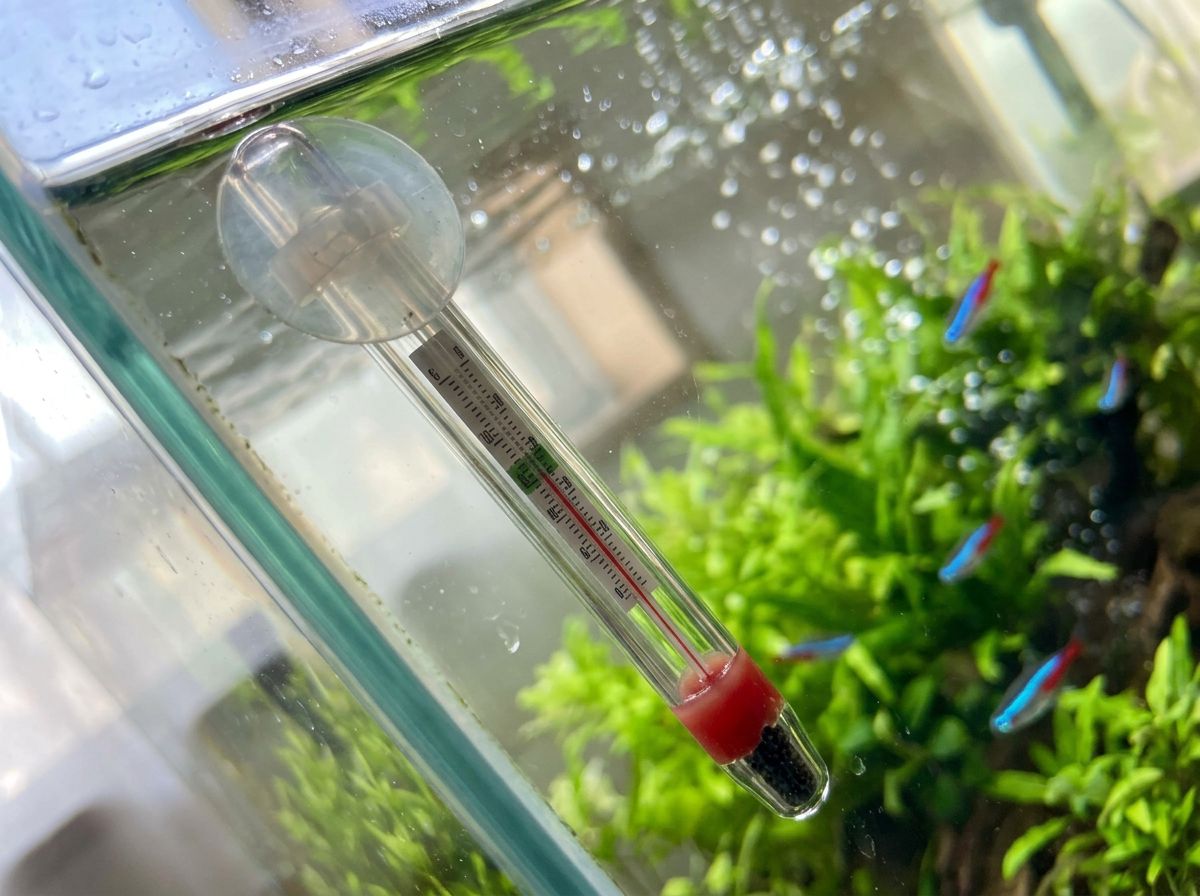
Medaka are most active and eat best at 20-28°C (68-82°F), with growth and spawning peaking around 25°C (77°F). So far that is almost the same as the tropical range of 22-28°C.
The big difference is that medaka keep going outside that range. In winter they can sit near 0°C (32°F) at the bottom of a container and wait for spring, as long as the water does not freeze solid. In summer, above 30°C (86°F) they suffer heat stress, so shade and placement matter.
In other words, medaka care is less about holding a fixed temperature and more about changing what you do to match today's temperature. That only works if you know the temperature, so even an unheated bowl deserves a thermometer. See choosing a thermometer and logging temperature daily.
Slightly acidic to slightly alkaline: more tolerant of alkaline water than tropicals
Medaka do well from slightly acidic to slightly alkaline water (roughly pH 6.5-8.0 as a guide), which reaches a little higher than the usual tropical target of 6.5-7.5. Most tap water falls inside this range, so once the chlorine is removed there is nothing to adjust.
What matters more than the number is sudden change. A swing of 0.3 or more in a day stresses medaka just as it stresses tropical fish. Avoid replacing a large share of the water at once, and keep heavy rain from flooding an outdoor container.
Container and stocking: one fish per liter at most, two liters is comfortable
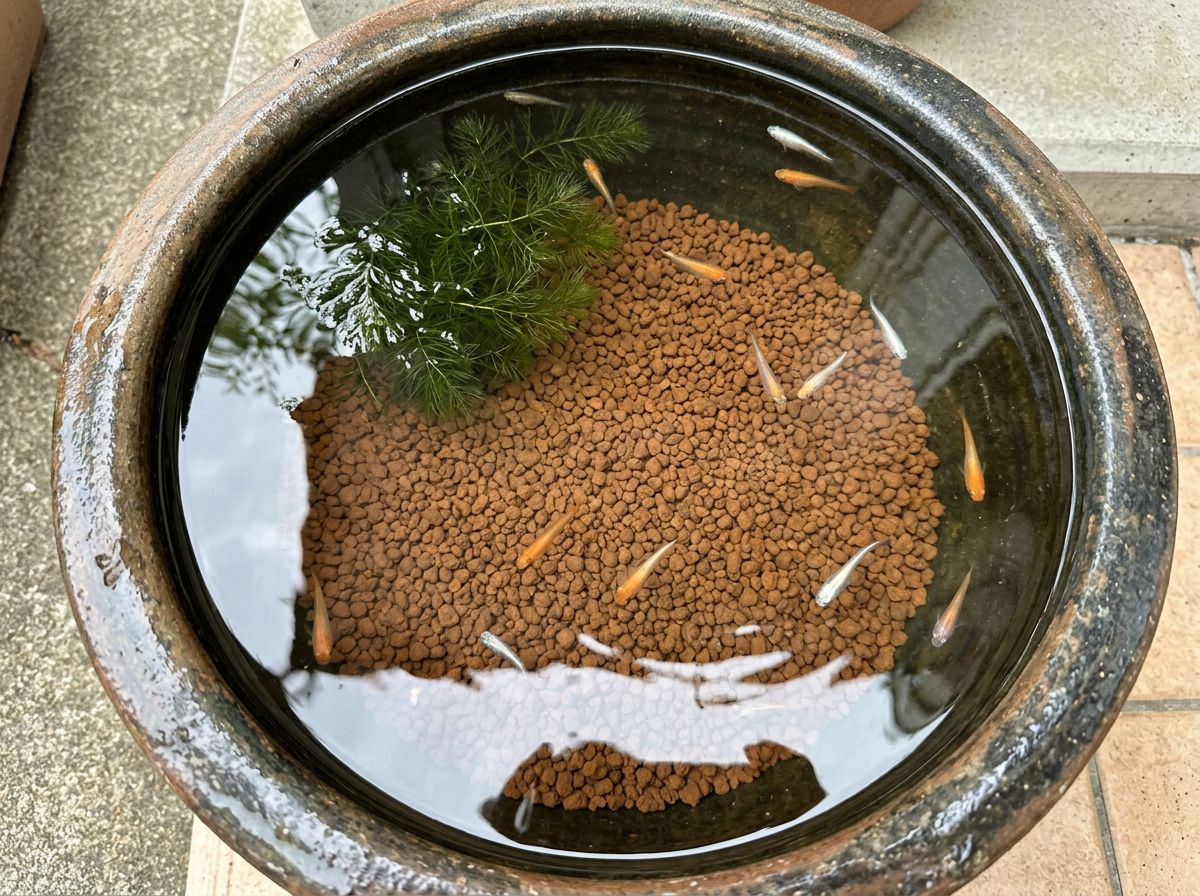
The common rule of thumb is one medaka per liter of water as an upper limit. That is fairly tight, and specialist shops recommend giving each fish about 2 liters. Note that this is far denser than the tropical-fish guideline of one liter per centimeter of body length (3-4 liters for a 3-4 cm medaka); it is a working figure for large, planted outdoor containers. By container size, that works out roughly like this:
| Container | Water volume | Stocking guide |
|---|---|---|
| Small bowl | 5 L (1.3 gal) | 3-5 fish (small for year-round outdoor use: vulnerable to summer heat and winter freezing) |
| Medium lotus bowl or tub | 14 L (3.7 gal) | 10-15 fish |
| 30 cm (12 in) tank | about 12 L (3 gal) | 10-12 fish |
| 60 cm (24 in) tank | about 57-64 L (15-17 gal) | around 30 fish |
A 2 L (0.5 gal) jar is only for holding one or two fish indoors temporarily. Left outside it swings in temperature and runs short of oxygen in summer, and for an outdoor container that has to get through winter, 10 L (2.6 gal) or more is the overwintering guideline. More fish means faster-fouling water and a higher risk of low oxygen in summer. Start light and add gradually while watching the water. If you want them to breed, set up a separate breeding or fry container of 10 liters or more.
Bigger containers also mean steadier temperature and pH. Outdoors, aim for a water depth of at least 15 cm (6 in), ideally 20 cm (8 in) or more, which buffers both summer heat and winter freezing.
Feeding and water changes
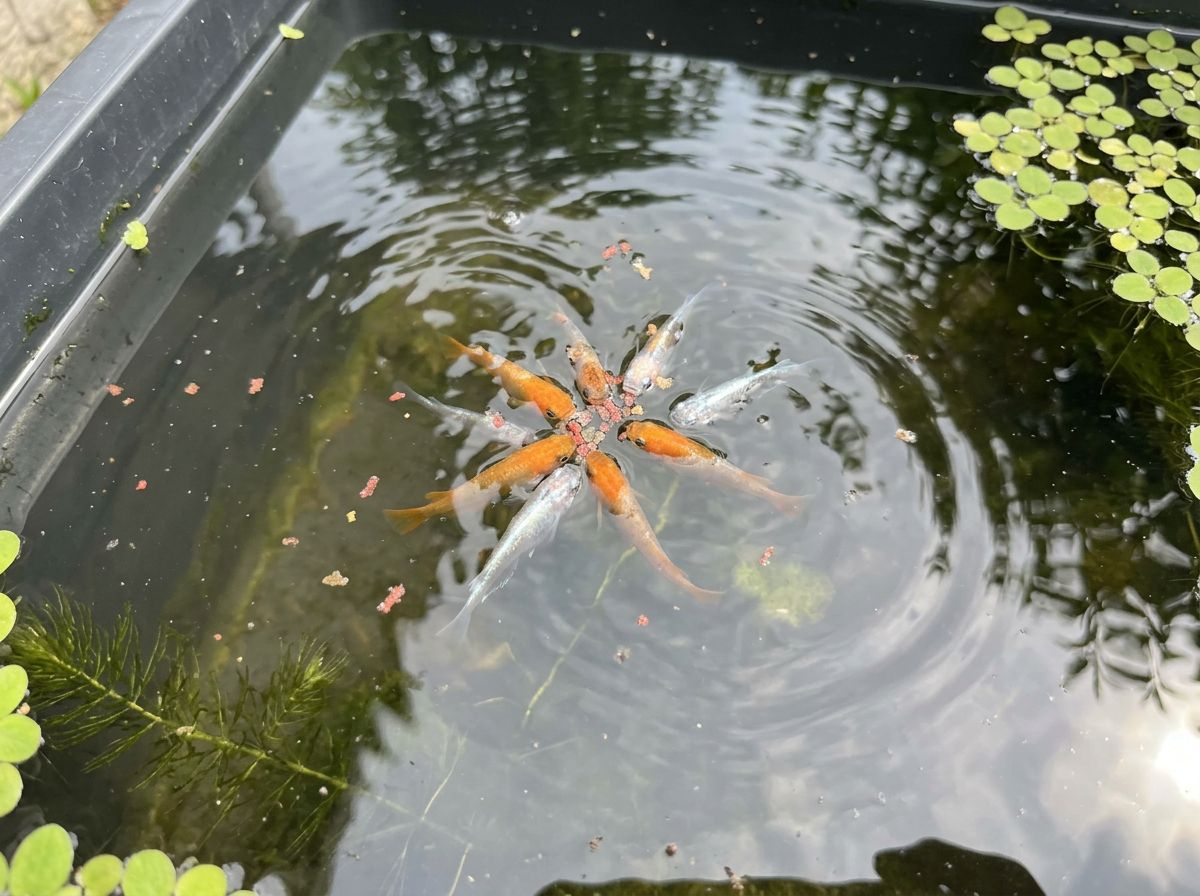
Feeding during the active season above 20°C is the standard one or two feeds a day, as much as they finish in two to three minutes. Leftovers sink and foul the water, so cut back if food remains. As the water cools, appetite drops too: reduce feeds below 15°C (59°F) and stop entirely below 10°C (50°F). This switch is the single most important habit in medaka keeping, and it gets its own article: overwintering medaka outdoors.
Water changes in the active season follow the usual weekly 1/4 to 1/3. A large outdoor container with plants and microbes stays clean for a long time and often runs on top-offs alone, but nitrate still creeps up. Test nitrate about once a month and change water before it passes 40-50 mg/L. Always dechlorinate new water, match it to within 1-2°C (2-4°F) of the container, and add it slowly.
Don't over-breed, and never release
Given the right conditions, medaka multiply fast. If you end up with more than you can keep, never release them into a river or pond. Japanese medaka populations differ genetically by region, and Japan's Ministry of the Environment warns that releasing fish from elsewhere, or ornamental strains such as himedaka, leads to hybridization that erases locally unique diversity. The ministry and the aquarium trade association ask keepers to care for their fish for life.
To keep numbers down, don't collect eggs, leave out spawning mops, or separate males from females. Deciding whether you want them to breed before you start saves trouble later.
FAQ
Do indoor medaka need a heater?
Not necessarily. Indoor rooms don't get as cold as a balcony, and adult medaka overwinter unheated indoors without trouble (small fry born in autumn and thin fish are a different matter: if the room cannot hold a temperature at which they keep eating, consider heating). The exception is a room where heating cycles on and off and the water swings widely within a day. Check morning and evening readings; if the gap is large, a heater that can be set low can put a floor under the temperature. See keeping medaka indoors.
Can medaka live with tropical fish?
People do keep them with peaceful small fish in a steady 22-26°C tank. But medaka are built for unheated, seasonal conditions, and they tend to live longer in a medaka-only container managed by the season than squeezed into a tropical setup.
How long do they live?
Around two to three years in captivity is the usual figure, and longer under good conditions. Poor water and overcrowding are the main things that shorten it, so modest stocking plus an eye on temperature and water quality is the best recipe for a long life.
Summary
- Target 20-28°C, but unheated is normal. Adjust care to the temperature, not the other way round
- Slightly acidic to slightly alkaline (roughly pH 6.5-8.0). Stability beats the exact number
- Stock at most one fish per liter, comfortably two liters each. Start light
- Feed once or twice a day, what they finish in 2-3 minutes. Cut back at 15°C, stop below 10°C
- Don't over-breed, and never release
An unheated container is exactly where a temperature log earns its keep. Log daily temperature in the Aquarium app and the moments to cut feeding back, and to start again in spring, show up in the numbers.