Fish You Can Keep Without a Heater: Medaka, Goldfish and White Clouds
Only cold-tolerant fish can go without a heater. Conditions for medaka, goldfish and White Clouds, and why an unheated tank still needs a thermometer.
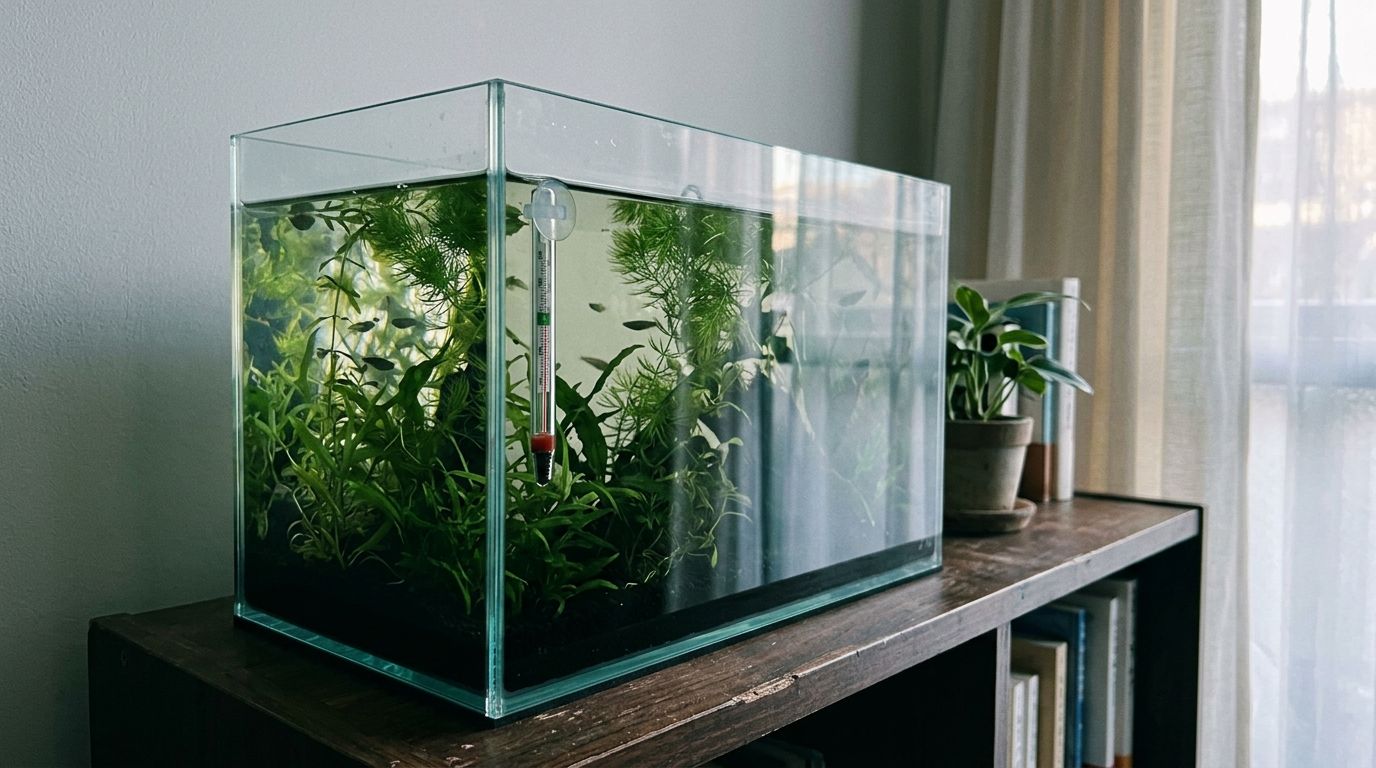
"I'd like to keep fish without running a heater." "It's only a small tank, so I'd rather not put one in." Both are common wishes among people starting out. The short answer is that the classic unheated fish are medaka (Japanese rice fish), goldfish of the slim-bodied type, and White Cloud Mountain minnows. But "no heater" does not mean "no need to think about temperature". Each of the three comes with its own conditions for going unheated.
Only cold-tolerant fish can go unheated
Most fish sold in shops are tropical, with a target temperature of 22-28°C (72-82°F). In winter that means a heater, and that includes bettas and guppies, which are often kept in small tanks (see bettas need a heater in winter and guppies, heaters and seasonal temperature). What happens as the water cools is covered in what low temperature does to tropical fish.
The fish that can live unheated are the ones that tolerate cool water to begin with. The sections below take medaka, goldfish and White Clouds in turn.
Medaka: overwinter even outdoors; the danger is freezing solid
Medaka are the best suited of the three to life without a heater. They are most active and eat best at 20-28°C (68-82°F), but they carry on outside that range, and they get through winter with no heating indoors and even in outdoor containers.
In winter, medaka sit at the bottom in something close to hibernation and wait for spring. A thin sheet of ice on the surface is not a problem. What is fatal is the container freezing all the way to the bottom. For a container that has to get through winter outdoors, the guide is a water depth of at least 15 cm (6 in), ideally 20 cm (8 in) or more, and at least 10 L (2.6 gal) of water.
The fish that can overwinter outdoors are those that have reached at least 1.5 cm (0.6 in), ideally 2 cm (0.8 in). Smaller fry, thin fish and short-bodied daruma types should spend winter indoors.
Feeding changes with the temperature.
- 15-20°C (59-68°F): cut back to one feed a day, as much as they finish in one to two minutes
- 10-15°C (50-59°F): as a rule, don't feed. If you do, a tiny amount around midday on a warm day
- 10°C (50°F) or lower: don't feed
This guide is for adults overwintering outdoors. For small fish brought inside, don't apply it; give small amounts they finish, judged by the temperature and how they eat. The numbers are guides, so also watch whether the fish come up to eat and whether food is left over. The outdoor winter routine is covered in overwintering medaka outdoors.
Goldfish: slim-bodied types yes, fancy types are safer heated
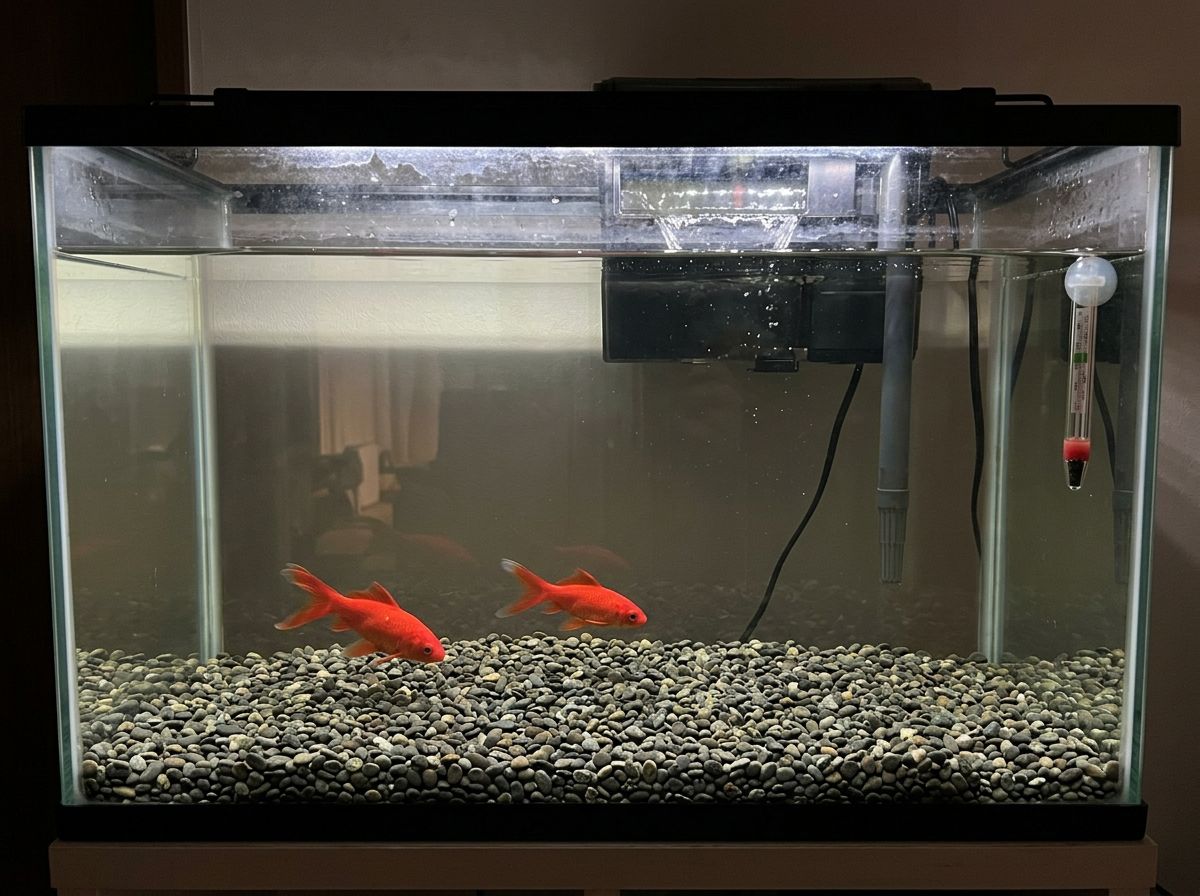
Goldfish also cope well with cold. The Aichi Prefectural Fisheries Research Institute in Japan states that goldfish can be kept outdoors, so keeping them without a heater is not a problem. They are most comfortable at around 20-25°C (68-77°F), with 15-28°C (59-82°F) as the accepted range, and they can still be kept when winter takes the water below that.
The answer depends on the variety, though.
- Slim-bodied types (wakin, comet, shubunkin and other long-bodied goldfish): can be kept unheated
- Fancy round-bodied types (ryukin, telescope, ranchu, pearlscale and the like): considered less tolerant of cold than the slim types, and specialist shops recommend a heater. The same institute also notes that holding the temperature steady is said to help prevent capsizing (floating or tilting) in round-bodied goldfish
As the water cools, goldfish and their feeding change in stages.
| Water temperature | What the goldfish do | Food |
|---|---|---|
| Below 15°C (59°F) | Appetite drops and they slow down | Cut back |
| Below 10°C (50°F) | Activity stalls | Move toward stopping |
| 5°C (41°F) or lower | They hibernate and stop moving (unheated, outdoors) | Don't feed |
Sources differ on exactly where the lines fall, so always check whether the fish come to eat and whether they are producing waste.
Note that goldfish do not need a heater, but they are not small-tank fish. They grow large, so a 60 cm (24 in) tank is recommended for keeping them long term, with 45 cm (18 in) as the minimum. For when a heater is worthwhile, and how to add one partway through winter without a sudden jump, see do goldfish need a heater?.
White Cloud minnows: indoors yes, with a 15°C minimum
White Cloud Mountain minnows are temperate fish that handle cool water well, with a target of 18-25°C (64-77°F). Specialist shops and manufacturers alike say they can be kept indoors through winter without a heater.
That does not mean anywhere indoors. The condition is that the coldest reading where the tank sits does not drop below 15°C (59°F).
- Below 15°C (59°F): they slow down and white spot (ich) is said to become more likely. This is the line at which a heater is recommended
- Around 10°C (50°F): the lower limit of what they tolerate, not a comfortable temperature
An unheated hallway, a north-facing room or an indoor spot in a cold region can dip under 15°C before dawn. In that case, move the tank or think about heating. If you do heat, one approach is an adjustable heater set on the low side. A sharp overnight drop of 5°C (9°F) or more is also said to trigger white spot.
The same line applies outdoors. Outdoor containers in Japan fall well below 15°C (59°F) in winter, so we don't recommend overwintering White Clouds outside. If yours are outdoors, bring them in before the water drops under 15°C.
One more point: the similarly named Vietnamese White Cloud is a different species. It is said to be less cold-tolerant than the regular White Cloud and is not a candidate for unheated keeping. The indoor and outdoor lines, and how to heat, are set out in can White Clouds overwinter without a heater?.
An unheated tank still needs a thermometer and a log
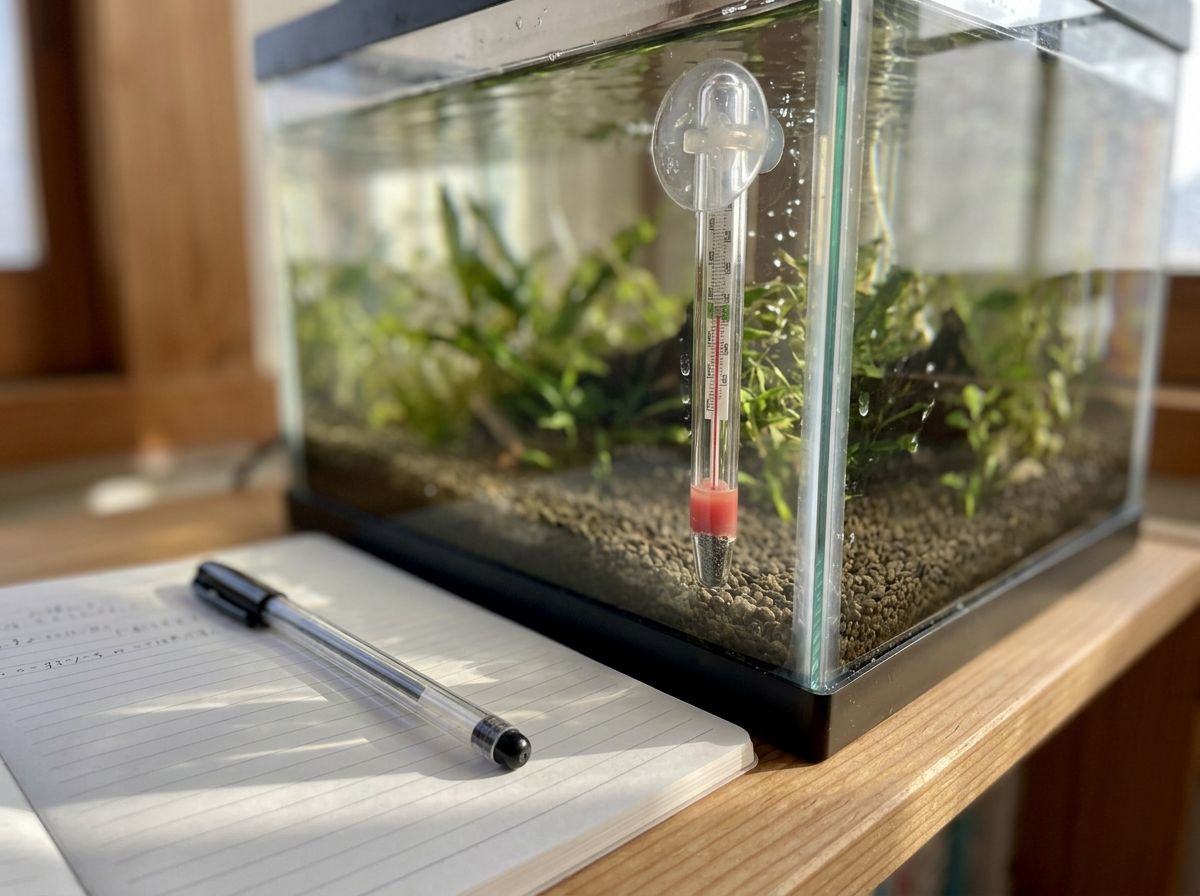
Without a heater, the water follows the room or the weather and moves every day, so a thermometer, read daily, is essential. You use it to decide when to cut back or stop food, when to add heat or move the tank, and to notice a cold snap before dawn. The reading that matters is the morning one, when the water is coldest.
The less water a tank holds, the faster it follows the room. If you keep a small tank unheated, choose a spot away from the window where the room heating does not switch on and off much.
If you are buying fish in winter, ask the shop what temperature they have been kept at. Moving a fish from a heated shop tank straight into a cold unheated tank is a known cause of illness. Floating the bag is not enough when the gap is large: either wait until spring, or take time to bring the temperatures together before releasing the fish. The steps are in how to acclimate new fish. Ask the shop if you are unsure.
For water changes too, dechlorinate new water, bring it to within 1-2°C (2-4°F) of the tank, and add it slowly. For outdoor medaka in their near-hibernation state, the rule over winter is no water changes at all, only topping up what has evaporated.
A fish that does not need a heater is not a fish that shrugs off heat. The thermometer earns its place in summer too.
FAQ
Can't tropical fish go without a heater if the tank is indoors?
We don't recommend it. Even indoors the water can fall below the tropical target (22-28°C / 72-82°F) at night and before dawn once the room heating is off. If you want to keep fish without a heater, choosing cold-tolerant fish from the start is the surer route.
Can medaka, goldfish and White Clouds share a tank?
This article assumes a separate tank for each species. Goldfish have large mouths and grow big, and they are not suitable tank mates for medaka or White Clouds. Medaka and White Clouds can share a tank only indoors, where you can hold the water in the band their targets overlap (20-25°C / 68-77°F). Don't add White Clouds to an outdoor tub or an unheated medaka container that follows the seasons, and expect medaka eggs and fry to be eaten.
With no heater, do I stop feeding in winter?
It depends on the fish and the temperature. The guides are in each section above; if your indoor tank never gets that cold, keep feeding in reduced amounts. See feeding fish in winter for more.
Summary
- Only cold-tolerant fish can go without a heater. Tropical fish (target 22-28°C / 72-82°F) assume one
- Medaka: adults of 1.5 cm (0.6 in) or more overwinter even outdoors (small, thin and daruma fish go indoors). The danger is the water freezing solid. Cut food back below 20°C (68°F), as a rule stop below 15°C (59°F), and don't feed at 10°C (50°F) or lower
- Goldfish: slim-bodied types can go unheated; fancy types are safer with a heater. A 60 cm (24 in) tank is recommended
- White Cloud minnows: fine indoors, with a 15°C (59°F) minimum; outdoors, bring them in before the water drops under 15°C. 10°C (50°F) is the limit of what they tolerate. Vietnamese White Clouds are excluded
- Keep the three in separate tanks. Fit a thermometer and read it every morning, and mind the temperature gap when buying fish in winter
Log the daily temperature in the Aquarium app and you can see the downward trend on a graph. The app judges against the general tropical range (22-28°C / 72-82°F), so an unheated tank will show yellow or red in winter. Read your log against the guide for the fish you keep and the lines in this article.