Choosing Tank Mates: Size, Temperament and Swimming Level
Tank mates must first share a temperature range. Then run three checks: size difference, temperament and swimming level. Plus quarantine and adding slowly.
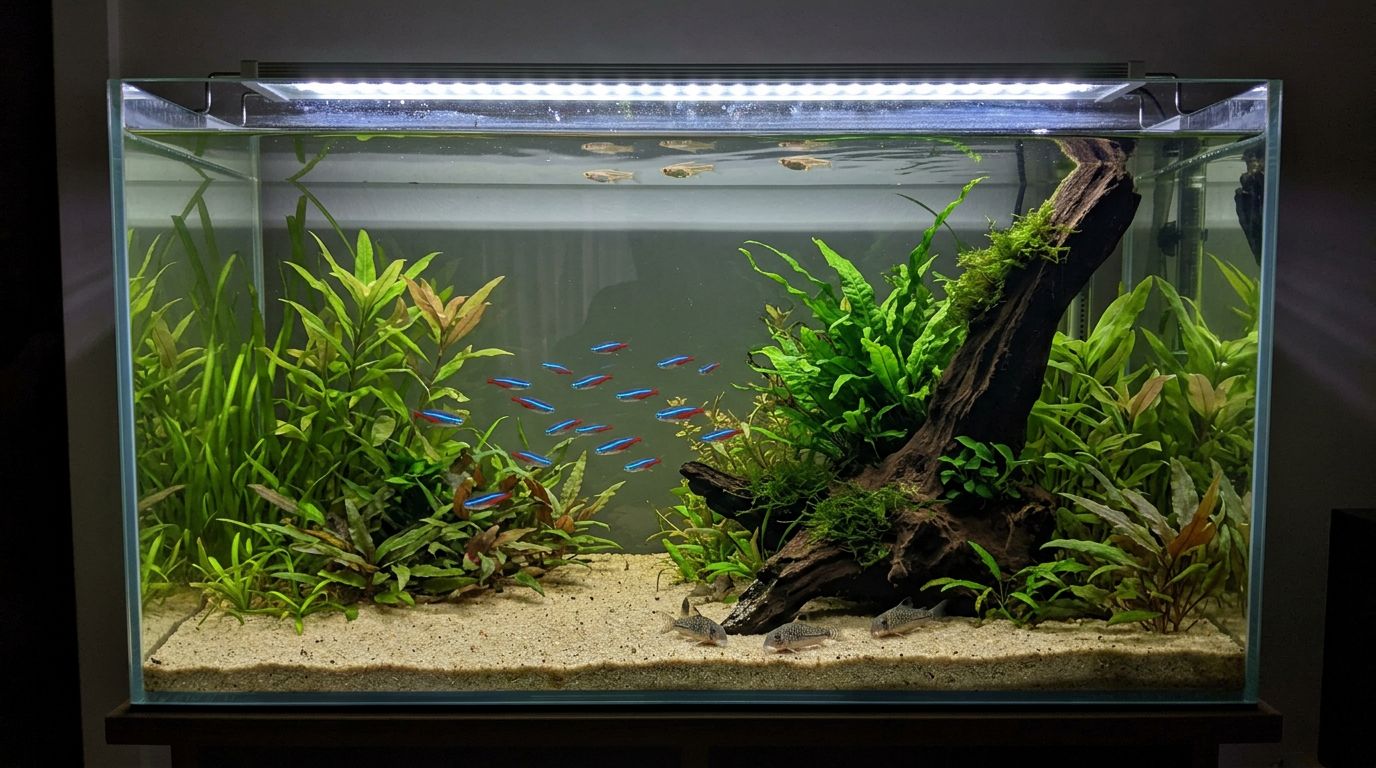
"Can these two live together?" It is the question everyone gets stuck on in front of the shop tanks, and compatibility charts rarely list the exact pair you have in mind. The short answer is that compatibility comes down to three things: size difference, temperament and swimming level. Before any of them, though, comes a precondition: everyone has to share the same temperature range and water. A fish whose temperature does not overlap is off the list before compatibility even comes up. This guide covers the thinking that applies to every species and the steps for adding fish. Whether a specific pairing works is left to the tank mate article for each species.
One thing first: no combination is ever guaranteed. The three checks are tools for picking pairings that are less likely to fail.
Size: anything that fits in a mouth gets eaten
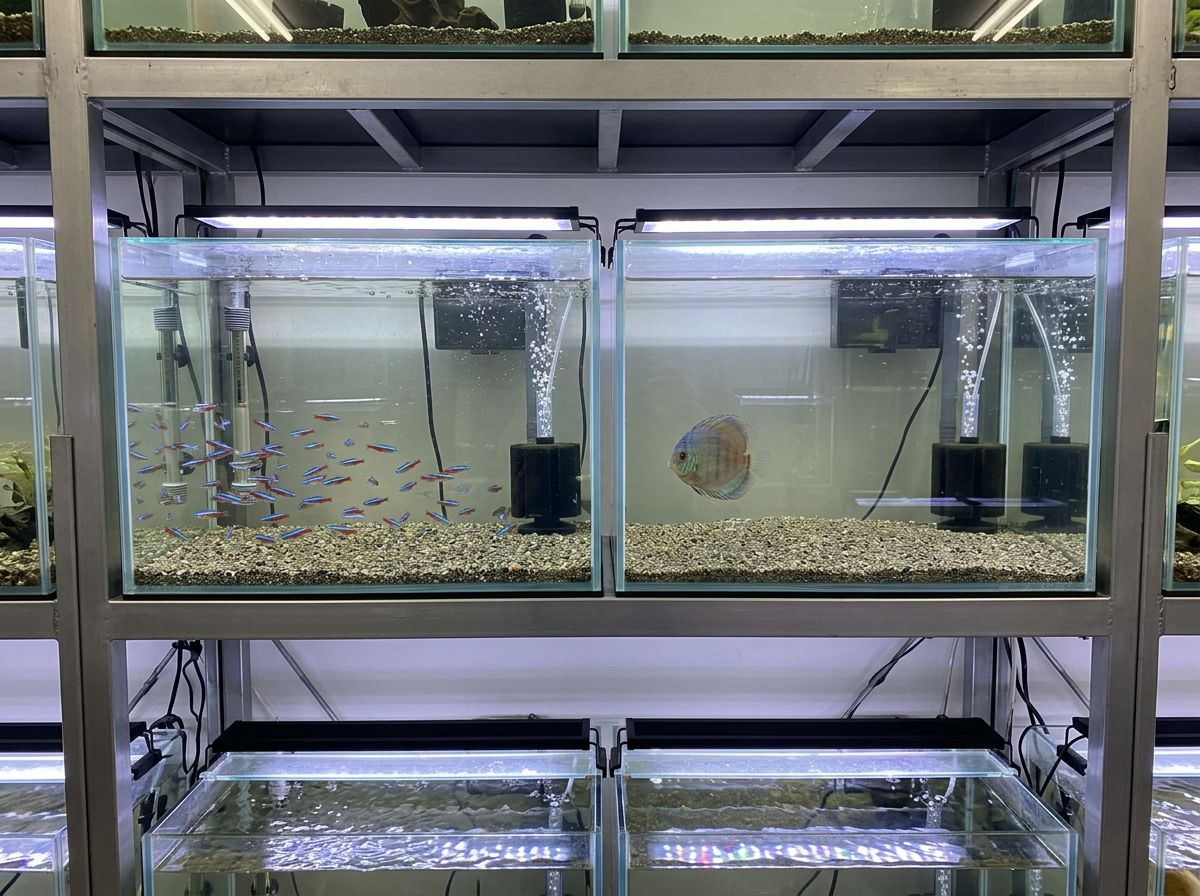
Start with the difference in body size. Anything small enough to fit in another fish's mouth is prey, and that holds even for fish that are normally peaceful.
- Think in adult sizes. Shop fish are often juveniles. Two fish that match today may be far apart once grown
- Treat fry and baby shrimp separately. Young born in a community tank are bite-sized. If you want them to survive, see guppy tank mates and tank mates for cherry shrimp
Once you know what you want to keep, ask the shop how big it gets and how large its mouth is before you buy.
Temperament: some fish fight their own kind
The second check is temperament. Even at similar sizes, some fish chase others or nip their fins.
- Fish that fight their own species. The classic case is the betta: two males cannot share a tank. See betta tank mates
- Fin nippers. Tiger barbs are notorious for it. Put them with long-finned fish and those fins become the target
A bad temperament match does not always show right away. The bullied fish may stop getting food, or its fins may wear down bit by bit. That is why watching closely after introduction matters so much.
Swimming level: spread them across top, middle and bottom
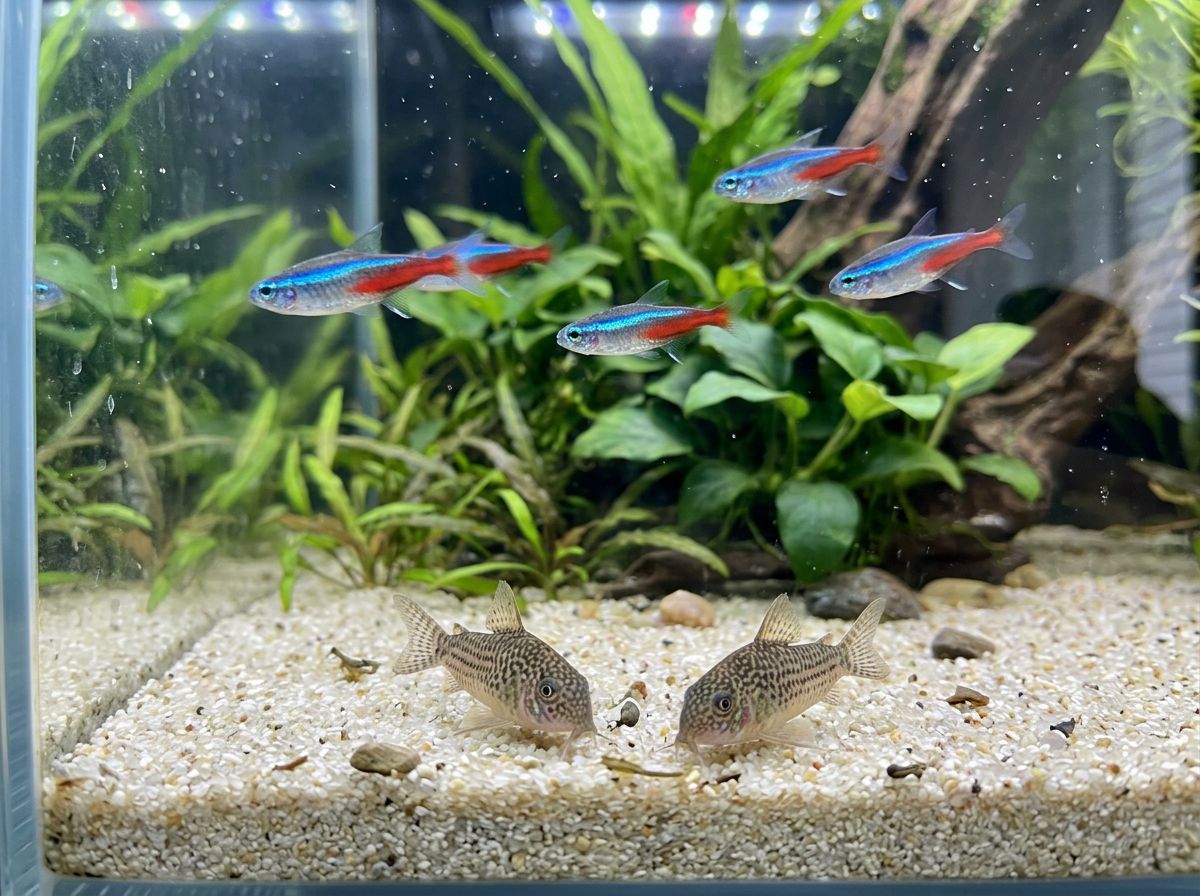
The third check is where each fish swims. Some species stay near the surface, some in mid-water, and some on the bottom. Choose fish that divide themselves across the top, middle and bottom levels, and they compete less for space.
Collect fish that all prefer the same level and one part of the tank gets crowded. With the same number of fish, a tank feels less cramped when the levels are spread out. That is the whole reason to think about swimming level.
Spreading the levels does not mean you can keep more fish, though. The waste load depends on how many fish there are and how much they are fed, whatever level they use. Stocking is covered in how many fish can I keep?.
Temperature and water: the precondition that comes before compatibility
The three checks above are about compatibility, but one thing has to be settled before them: temperature and water chemistry. A tank can only offer one set of conditions, so every fish in it has to be comfortable at the same temperature and in the same water. A pairing that passes all three checks still fails if the temperature ranges do not overlap.
The general tropical guideline is 22-28°C (72-82°F) and pH 6.5-7.5. But preferred ranges differ by species. Some fish, such as goldfish and medaka, are kept cooler than tropical fish, and even among tropicals some species do poorly at the warm end. Look up the range in each species' care guide and check that they overlap.
Which partners work, and under what conditions, is covered species by species. When you combine two species, read both articles, and where their conditions disagree, go with the stricter one.
- Corydoras tank mates
- Neon tetra tank mates
- Guppy tank mates
- Otocinclus tank mates
- Tank mates for cherry shrimp
- Betta tank mates
- Goldfish tank mates
- White cloud minnows with medaka
- Platies with guppies
Adding fish: two weeks of quarantine, a few at a time
Even a good pairing can fail if the introduction goes wrong.
- Add fish only to a cycled tank. A tank that is still cycling is not the place to add more
- If the tank already holds fish, quarantine newcomers in a separate container for two weeks. The steps are in quarantine new fish for two weeks. For the first fish going into a cycled, empty tank, no separate container is needed: observe them daily in the main tank for the first two weeks. Wait at least two weeks before the next addition, and send that one through quarantine. Media, water and nets used for quarantine do not go back into the main tank and are not shared with it
- Acclimate before release. Match the temperature, then mix in tank water a little at a time. Move only the fish; do not pour the bag water into the tank. See how to acclimate new fish
- Add a few at a time. A sudden jump in stock sends ammonia and nitrite back up. Test nitrate weekly for two to three weeks afterwards, and add the next group only if it stays below 40 mg/L
After introduction, watch both the newcomers and the residents every day: appetite, swimming, body surface, fins and breathing. Check whether anyone is being chased, anyone is missing out on food, or any fins are getting ragged. Keeping the quarantine container ready means you can separate fish as soon as a pairing turns out not to work.
FAQ
If a pairing is listed as compatible, is it safe?
"Compatible" means it tends to work, not that it is guaranteed. The outcome can vary with the tank and with the individual fish. Observe daily after introduction, and separate the fish if chasing or fin damage continues.
If they swim at different levels, can I keep more of them?
Spreading the levels makes a tank feel less cramped, but the water gets dirty just as fast. The stocking rule of thumb is one liter of water per centimeter of fish, and even that is only a starting estimate. Add gradually, and test that nitrate holds below 40 mg/L.
What if I add a fish and it doesn't work out?
Move it to a separate container or tank, where temperature and water quality need the same care. If you cannot keep it, talk to the shop you bought it from. Never release aquarium fish into a river or pond.
Summary
- First, temperature range and water have to suit everyone (this comes before compatibility). Use the species articles, and follow the stricter condition
- Then judge compatibility by size, temperament and swimming level. No combination is guaranteed
- Anything that fits in a mouth gets eaten. Think in adult sizes
- Male bettas cannot be kept together, and fin nippers such as tiger barbs exist
- Spread fish across top, middle and bottom, but that does not raise how many you can keep
- Add with two weeks of quarantine, acclimation, and a few at a time. Bag water stays out of the tank. Then confirm nitrate stays below 40 mg/L
Whether a community is working shows in how things change from day one. Log arrival-day photos and water tests in the Aquarium app and the photos and readings line up on one timeline, so you can compare fin condition and nitrate later.