How Many Fish Can I Keep? The 1 cm per Liter Rule and When to Add More
A common stocking guide is 1 cm of fish per liter: about 15-20 small tetras in 57 L (15 gal). Why it's only a start, and how nitrate guides additions.
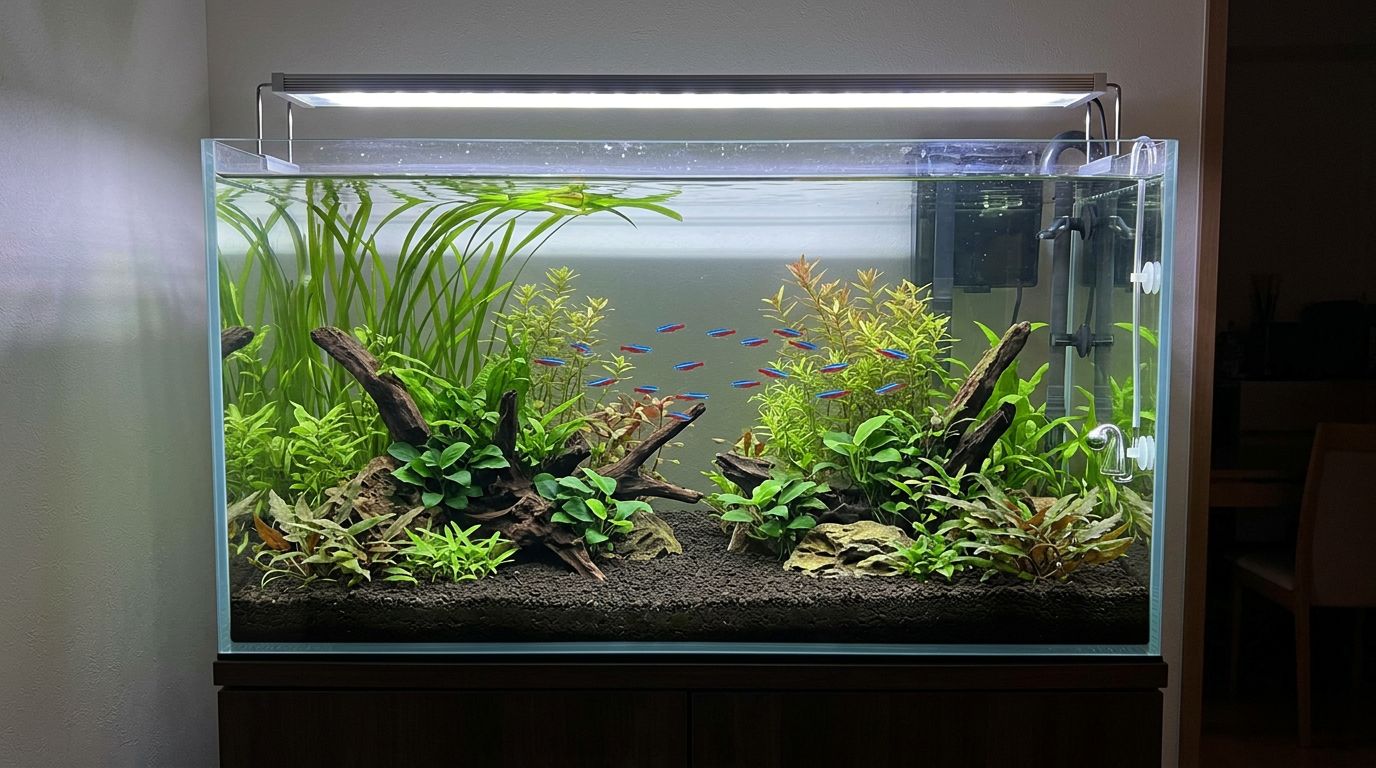
"How many more can this tank take?" "I added some last week. Is it too soon for more?" These questions come up most when choosing fish is at its most fun. The usual guide in Japan is 1 liter of water per centimeter of adult fish length, which puts a standard 60 cm (24 in) tank, holding about 57 L (15 gal), at roughly 15-20 small tetras. That number is only a first estimate. The dependable approach is to add a few at a time and confirm nitrate stays under 40 mg/L before adding more. This article explains how to use the guide and how to judge when the next addition is safe.
The standard guide: 1 liter per centimeter of fish
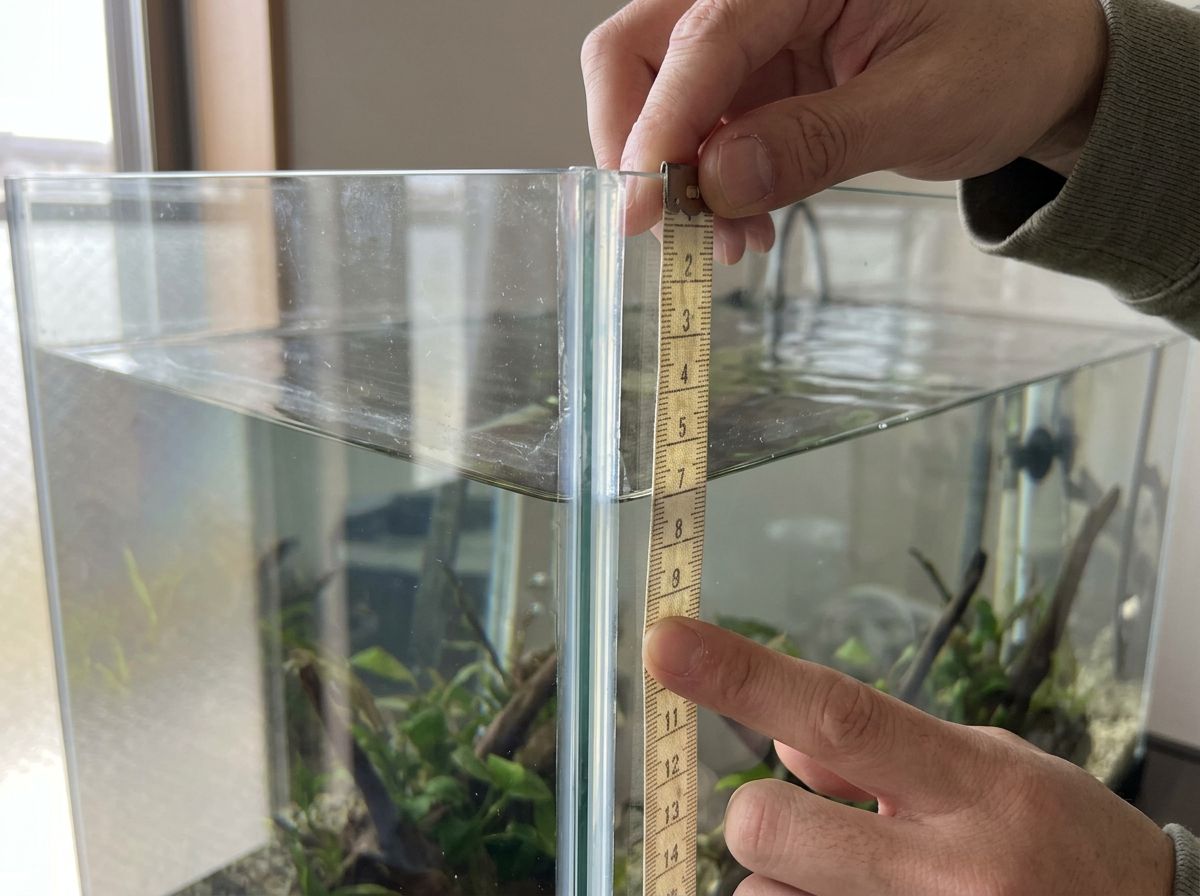
The stocking guide commonly used in Japan is 1 L of water for every 1 cm of body length.
- A standard 60 cm (24 in) tank actually holds about 57 L (15 gal)
- In that tank, the guide is around 15-20 small tetras
The arithmetic is water volume in liters divided by the adult length of one fish in centimeters. Small tetras reach about 3-4 cm (1.2-1.6 in), so 57 ÷ 4 is about 14 and 57 ÷ 3 is 19, which is where "around 15-20" comes from.
The volume to use is the water actually in the tank, not the catalogue capacity. Substrate, hardscape and the fill line all reduce it. Work out your own figure first with how to calculate aquarium water volume.
Why it is only a starting estimate
The guide is handy, but it doesn't guarantee a ceiling. Two tanks of the same volume can support different numbers.
- Fish grow. The guide is based on adult body length, so a tank filled to the limit at purchase size will be over it once the fish grow
- Conditions differ. The water change a tank needs is different for a heavily planted, lightly stocked tank than for a heavily stocked one. More fish foul the water faster
- More fish means more food. Overstocking and overfeeding are both named among the top beginner mistakes
The mix matters as well as the count. A fish small enough to fit in another's mouth may be eaten, and some species are aggressive. Choosing fish that occupy different levels (top, middle, bottom) makes the same number feel less crowded.
So the 1 cm per liter figure is where you start. The answer for your tank comes from the following method.
The pace: a few at a time, guided by nitrate
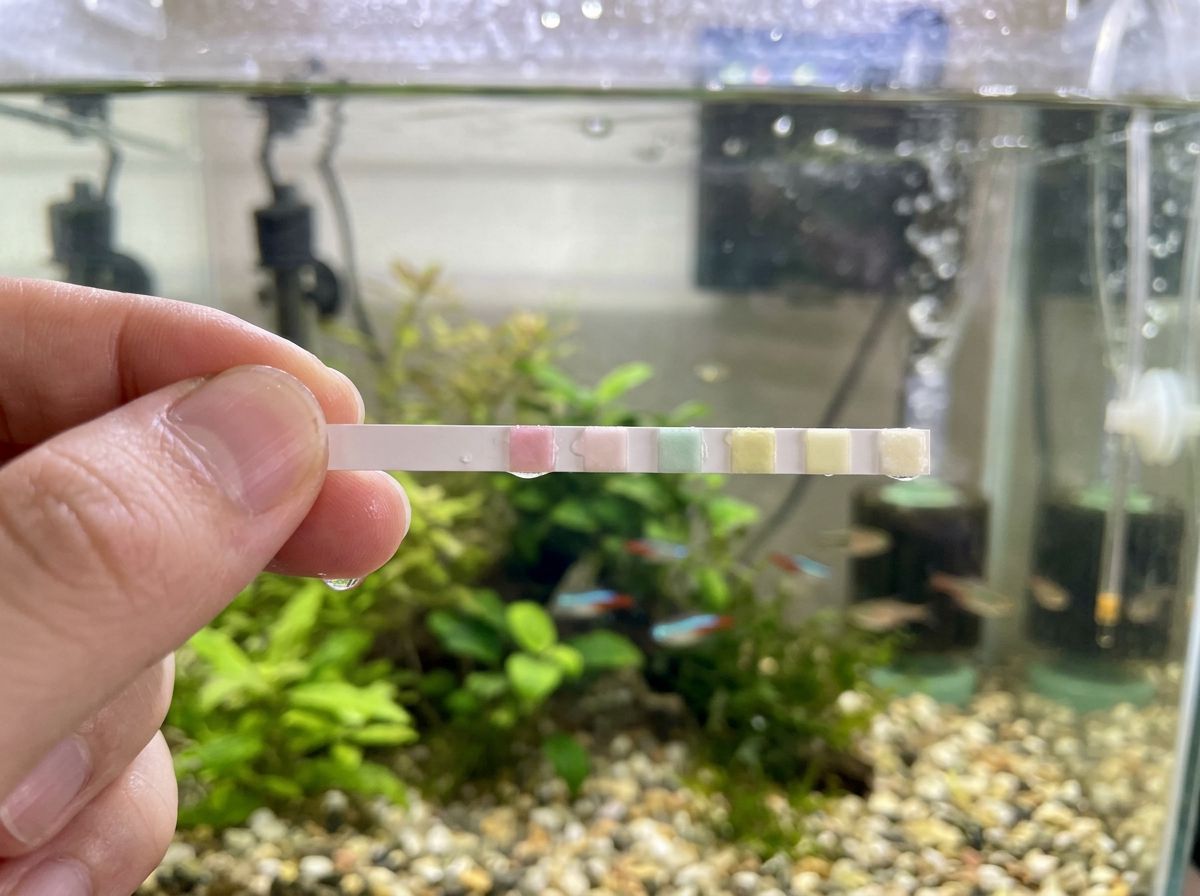
In practice:
- Add a few at a time. Don't stock to the limit in one go
- For two to three weeks after adding, test nitrate every week
- If nitrate has stayed under 40 mg/L, add the next group
Nitrate is the end product of fish waste and food breaking down. Plants take some of it up, but usually not enough on their own; water changes are the main way to remove it. The target is 0-25 mg/L (ideally 10 or less), and above 40-50 mg/L is the danger zone. If nitrate stays under 40 mg/L with your normal routine of a weekly 10-30% water change, that is one sign your water changes are keeping up with the current stock (the closer to the 25 mg/L target, the more headroom). If it passes 40 mg/L every week, it isn't time to add fish.
Right after an addition, it is worth testing ammonia and nitrite as well; both should be 0 mg/L. The full list of what to test and how often is in how often to test aquarium water.
All of this assumes a tank that has finished cycling. Don't add fish to a tank that is still cycling. And fish joining a tank that already holds fish should spend two weeks in a separate quarantine container first, which is the standard recommendation.
What happens if you add many at once
Adding a whole group at once "because it's within the guide" can cause trouble even when the count is right.
Waste is broken down by bacteria living on the filter media and substrate, and there are only as many as the previous stock supported. When fish and food increase suddenly, the bacteria can't keep up and ammonia and nitrite spike again. Both should read 0 mg/L; ammonia at 0.25 mg/L or more, or nitrite above 0.5 mg/L, is the danger range. The mechanism is explained in how long cycling takes and the nitrogen cycle.
A more heavily stocked tank also tends to show these changes:
- Total food goes up, and leftovers become more likely
- Nitrate climbs faster, so water changes may need to be larger or more frequent
If ammonia or nitrite is detectable after an addition, stop adding, dilute it that day with a small 10-30% water change, and test daily until it is back to 0. If the reading is still in the danger range after the change, do a second small change the same day and feed less. Dechlorinate the new water and match it to within 1-2°C (2-4°F) of the tank.
Fish with their own guides
The 1 cm per liter figure has small tropical fish in mind. Some fish have separate guides.
- Medaka (Japanese rice fish): there are medaka-specific figures by container size. See keeping medaka
- Goldfish: they grow large and produce a lot of waste, so they need more water than the tropical guide gives. See goldfish care basics
- Fish that volume doesn't decide: male bettas can't be kept together whatever the tank size. For algae-eating otocinclus, the number depends on how much algae the tank has, not on its volume
Other species have stocking notes in their own guides too. If you already know what you want to keep, check that species' care basics first.
FAQ
Can I add fish up to the guide number all at once?
We don't recommend it. The guide estimates a final number, not a pace. Adding many at once can send ammonia and nitrite back up. Add a few, test nitrate weekly for two to three weeks, and move on only once it has stayed under 40 mg/L.
How long should I wait before adding the next fish?
The guide is nitrate staying under 40 mg/L each week for two to three weeks after the last addition. Decide by the readings, not the calendar alone. Fish joining a tank that already holds fish also go through the standard two weeks in a separate quarantine container, so there are two weeks between bringing them home and adding them anyway.
Can I keep more fish with a stronger filter?
We don't have a basis for putting a number on how many more. Whatever the equipment, the check is the same: add a few at a time and test whether nitrate stays under 40 mg/L. Ordinary filtration does not remove nitrate; water changes are the main way to take it out.
Summary
- The standard guide is 1 L per 1 cm of adult fish length: around 15-20 small tetras in a 60 cm (24 in) tank of about 57 L (15 gal)
- Use the actual water volume. The guide is a first estimate and shifts with growth, tank conditions and feeding
- Add a few at a time, then test nitrate weekly for two to three weeks. Under 40 mg/L means you can continue (the closer to 25 mg/L, the more headroom)
- Adding many at once causes an ammonia and nitrite spike. If either is detectable, do a small water change that day
- Medaka, goldfish and others have their own guides, and for some fish, such as male bettas, volume isn't what decides
The answer to "how many more?" is in the readings more than in the arithmetic. Log nitrate weekly in the Aquarium app and the graph shows how the value moved before and after each addition, so you can decide on the next one from the numbers.